Parent Resources
Everything you need to support your young fencer — from the first class to national competitions.
Welcome to the Fencing Family
Welcome to our fencing family! We're thrilled to have your child join us. Whether they signed up for fun, fitness, or future competition, you've made a fantastic choice. This guide is your go-to resource for navigating your child's fencing experience with confidence.
Fencing blends mental agility with physical strength and coordination. It teaches kids to think ahead, stay calm under pressure, and be respectful on and off the strip.
A typical fencing class is 60–90 minutes:
Development Stages
Most children begin between ages 6 and 8, but the sport offers a clear developmental path for all ages:
All about fun, building confidence, and developing a basic understanding of the sport. Kids learn footwork, coordination, and bladework through engaging games and drills.
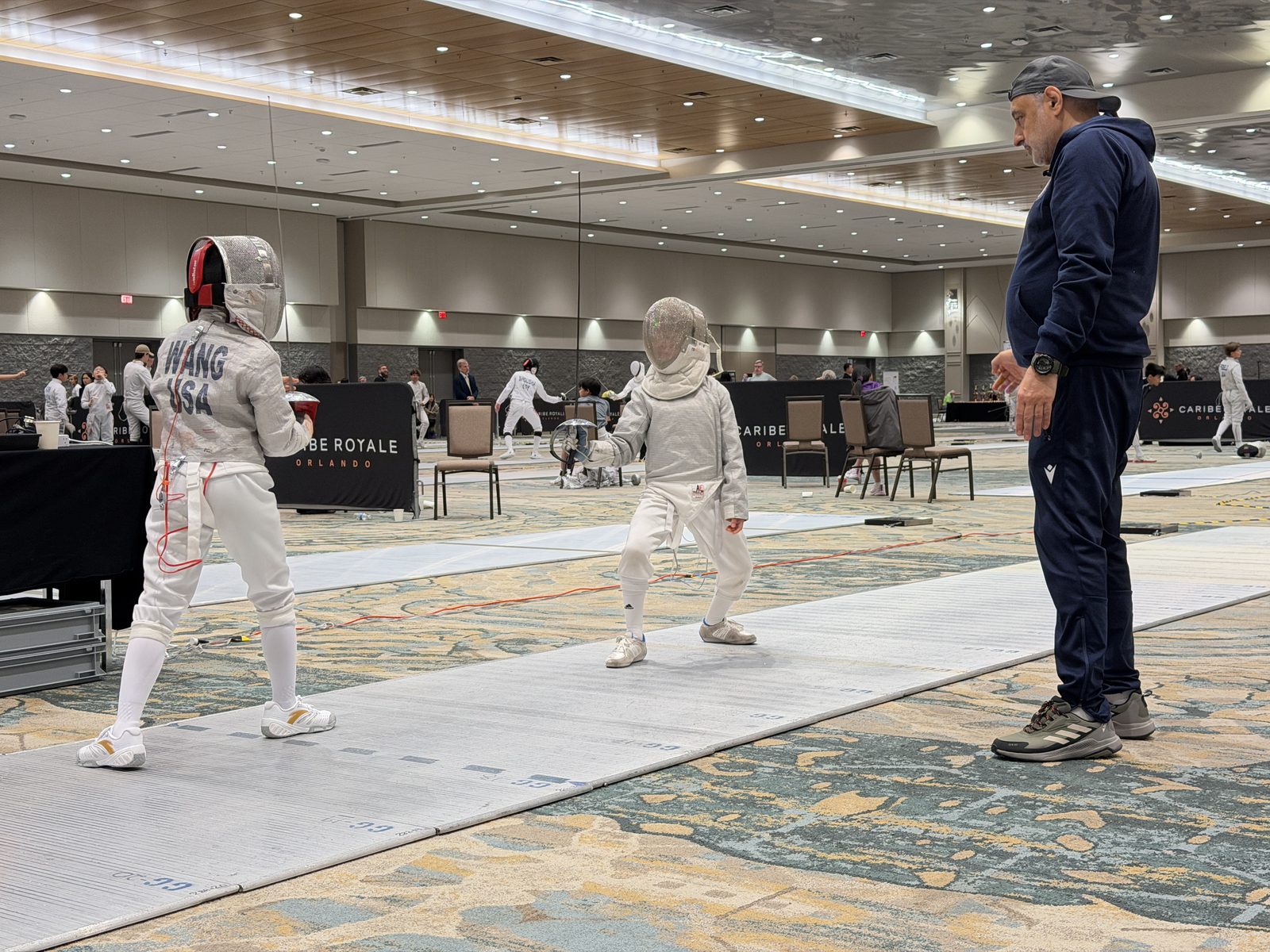
Many kids are ready to start competing. They gain a deeper understanding of tactics, rules, and strategy. Local and regional competitions become an exciting part of the journey.
Fencers focus on long-term goals, competing regionally and nationally. Athletes work toward earning ratings, building a competitive résumé, and preparing for college fencing.
Safety First
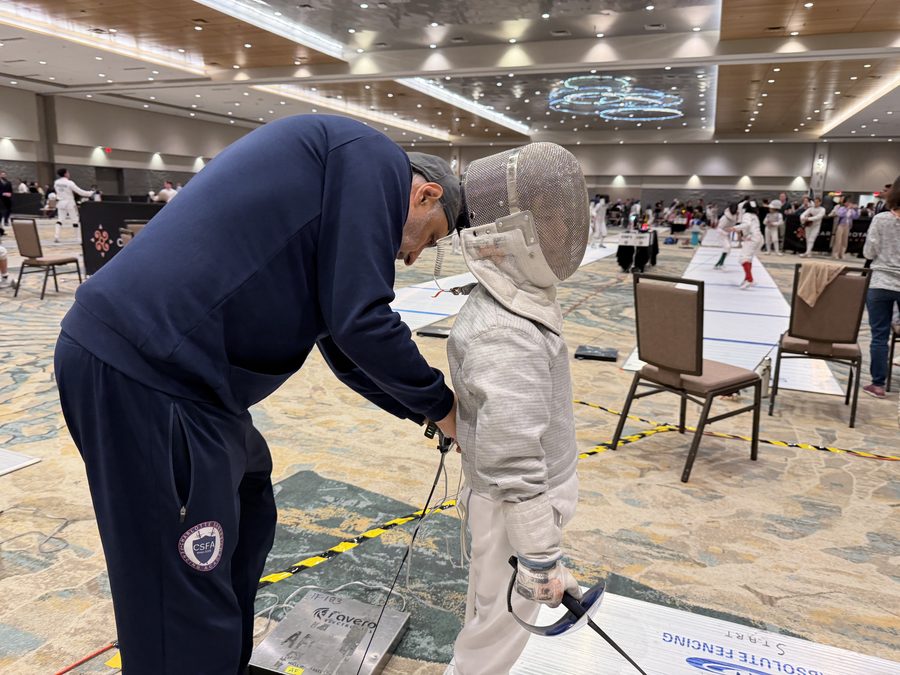
The answer is a confident yes. Fencing is statistically safer than many traditional team sports. All participants wear full protective gear:
Gear Up
Once your child progresses into regular training and competition, it's time to invest in personal equipment. Our trusted vendor: Absolute Fencing Gear.
Metallic lamé bib registers valid head touches. Look for CE-certified or FIE-rated for advanced competitors.
AF Sabre 350N Mask →Base layer under the lamé. Minimum 350N protection rating. Back-zip options for left-handed fencers.
AF Kids Jacket →Mandatory for all fencers. Worn under the jacket on the weapon arm side. 350N or 800N rating.
AF Underarm Protector →Mandatory for girls; recommended for boys. Worn under the jacket and plastron.
AF Chest Protector →Conductive cuff connects to the lamé. Must be in good condition — no holes permitted at tournaments.
AF Saber Glove →Conductive jacket covering torso and arms — required to register valid touches in saber. Get slightly larger to wear comfortably over the regular jacket.
AF Saber Lamé →Padded white pants extending just below the knees. Must be worn with long white socks.
AF Fencing Pants →At least two electric sabers required (one + one backup). Blade sizes: Size 0 (Y8), Size 2 (Y10), Size 5 (Y12+).
AF Electric Saber →Connects the saber to the scoring machine. Always carry a backup!
AF Master Body Cord →Competition Ready
Great for beginners. Low stress, close to home. Find events at AskFRED.net.
For more experienced fencers; earns regional points toward qualification. See USFA Regional Events.
Highly competitive; require qualification. See USFA National Events.
The Competitive Season
The USA Fencing competitive season runs August 1 through July 31 each year. Age groups are determined by your child's age as of January 1 of the current season.
| Division | Age on Jan 1 | Typical Grades |
|---|---|---|
| Y8 | 8 & under | Grades K–2 |
| Y10 | 10 & under | Grades 3–5 |
| Y12 | 12 & under | Grades 5–7 |
| Y14 | 14 & under | Grades 7–9 |
Fencers may "fence up" (compete in an older age group) but not down.
USA Fencing membership is required to compete in sanctioned events.
AskFRED.net for local/regional; USFA website for national events.
For national/regional events, register and book hotel ASAP — venues fill quickly. Watch for registration deadlines.
Common Questions
We love talking with parents. Reach out anytime — we're here every step of the way.